I-WIN Events
Designing Experiences Along the Work-Based Learning Continuum
In summer 2021, we hosted a three-part workshop series for designing career exploration, team-based challenges, and career development experiences.

In summer 2021, we hosted a three-part workshop series for designing career exploration, team-based challenges, and career development experiences.
The CEIF kick-off on May 27, 2021, explored options for extended learning using competency concepts as a more equitable strategy for credit recovery.
On May 25, 2021, the Mayor’s Employer Advisory Council in Evanston and North Chicago Community High School shared their processes to shift typically in-person work-based learning events to fully virtual opportunities.
On April 20, 2021, Alignment Rockford and Chicago Public Schools shared how they engage with partners who host work-based learning experiences including recruitment, ongoing support, and celebration of their partnerships.
On March 9, 2021, we shared lessons and insights from the Great Lakes College and Career Pathways Partnership and reviewed emerging ISBE expectations for reporting related to the College and Career Readiness Indicator, the College and Career Pathways Endorsement, and Perkins.
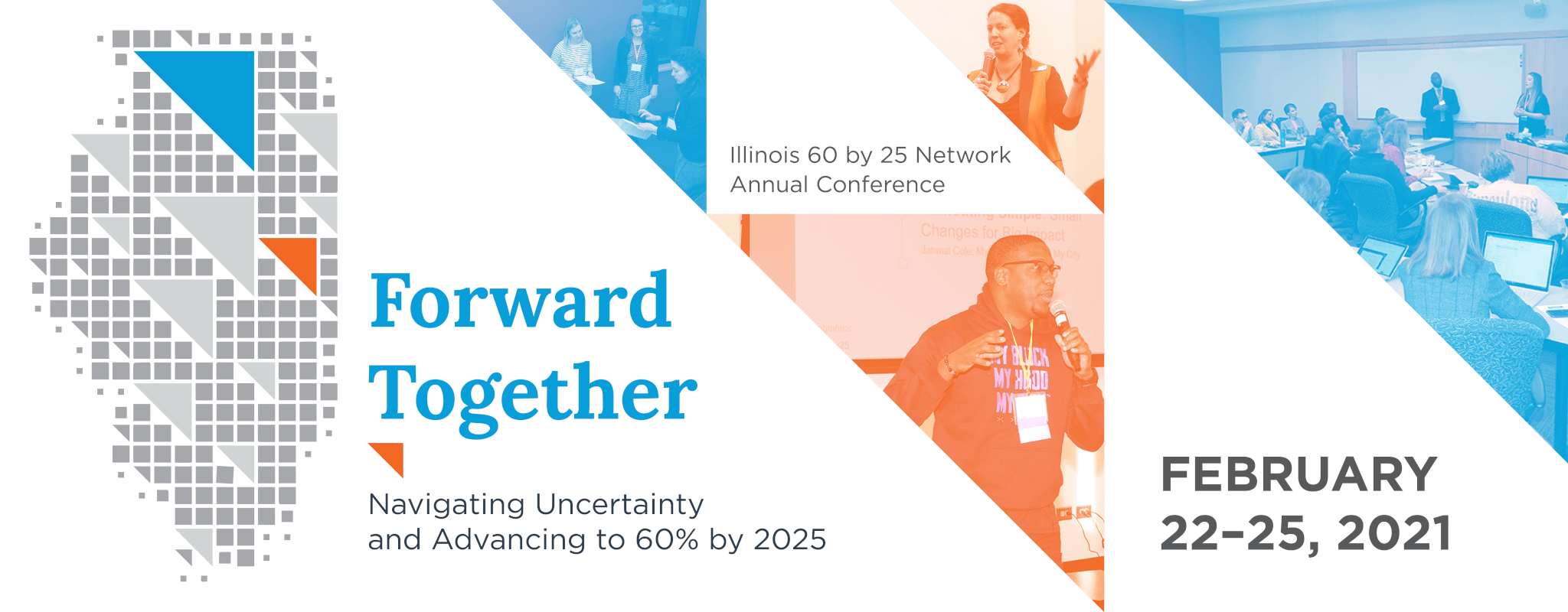
Join us February 22–25, 2021, for “Forward Together – Navigating Uncertainty and Advancing to 60% by 2025,” a free, virtual conference.
On January 21, 2021, we reviewed the Brookings report on how work-based learning can advance equity and opportunity, and heard from Here to Here on the value and impact of work-based learning to address educational equity and opportunity gaps.
On December 1, 2020, we shared an overview of career development experiences and heard from BJC Healthcare and Woodruff Career & Technical Center.
On October 28, 2020, we launched I-WIN with an overview of work-based learning plus guest speakers from Career Connect Washington, GCAMP, and Science Olympiad shared experiences and resources.

Covid-19 “disruptions” can offer new opportunities for moving toward personalization and competency-based approaches.