The growing momentum around competency-based education (CBE) in Illinois is transforming how colleges design programs, assess learning, and connect students to career pathways. By prioritizing demonstrated mastery over seat time, CBE offers more flexible and responsive learning models that expand access for learners while maintaining the rigor and high expectations needed for success in the workforce.
Over the past year, EdSystems partnered with the Illinois Community College Board (ICCB), the Illinois Green Economy Network (IGEN), community college faculty, and industry leaders to move CBE forward through three interconnected streams of work: building CBE healthcare programs, developing statewide electric vehicle competencies, and launching a statewide CBE resource hub. Together, these efforts reflect a coordinated strategy to strengthen both program design and system-level infrastructure for CBE across Illinois.
Building CBE Programs in Healthcare
To support colleges in moving CBE from concept to implementation, EdSystems led a structured, cohort-based initiative with institutions participating in ICCB’s Pipeline for the Advancement of the Healthcare Workforce (PATH) program. This effort focused on healthcare pathways and combined guided learning, individualized coaching, and peer collaboration to build institutional capacity for CBE design. Using CompetentU, the Competency-Based Education Network’s guided asynchronous platform, colleges engaged in a six-month process to design competencies, assessments, and core curriculum components.
An in-person convening at Rend Lake College played a critical role in helping participating colleges translate CBE concepts into actionable program design. During the session, Rend Lake President Lori Ragland and the college’s CBE leadership team shared insights from their At My Pace welding program, which is serving as a foundation for the college’s planned pilot of a medical assisting CBE program in Fall 2026.
Rend Lake highlighted their dual-pathway approach to CBE design, which provides two structured options for each program that align with varying levels of student readiness and scheduling needs.
- Students on a “flexible path” engage with online content independently, and schedule their own in-person lab and assessment time; there are no required meeting days. Flexible path students can meet with instructors as needed. This path is ideal for students who are self-motivated, have complex or unpredictable schedules, and are pursuing accelerated industry certification.
- Students on a “guided path” participate in designated in-person lab days and times with allocated hours. This path incorporates in-person lectures and demonstration support, while still allowing students to progress at their own pace. In fact, early completion is encouraged and supported by additional lab time and online content. The guided path is ideal for students transitioning from traditional education and those who benefit from structure and peer environment.
Students are guided into the pathway best suited to their starting point, while both options preserve the core principles of CBE, allowing learners to progress at their own pace as they demonstrate mastery. This model offered a concrete example of how institutions can balance flexibility with structure, ensuring that CBE programs remain both accessible and rigorous while meeting diverse student needs.
What Comes Next?
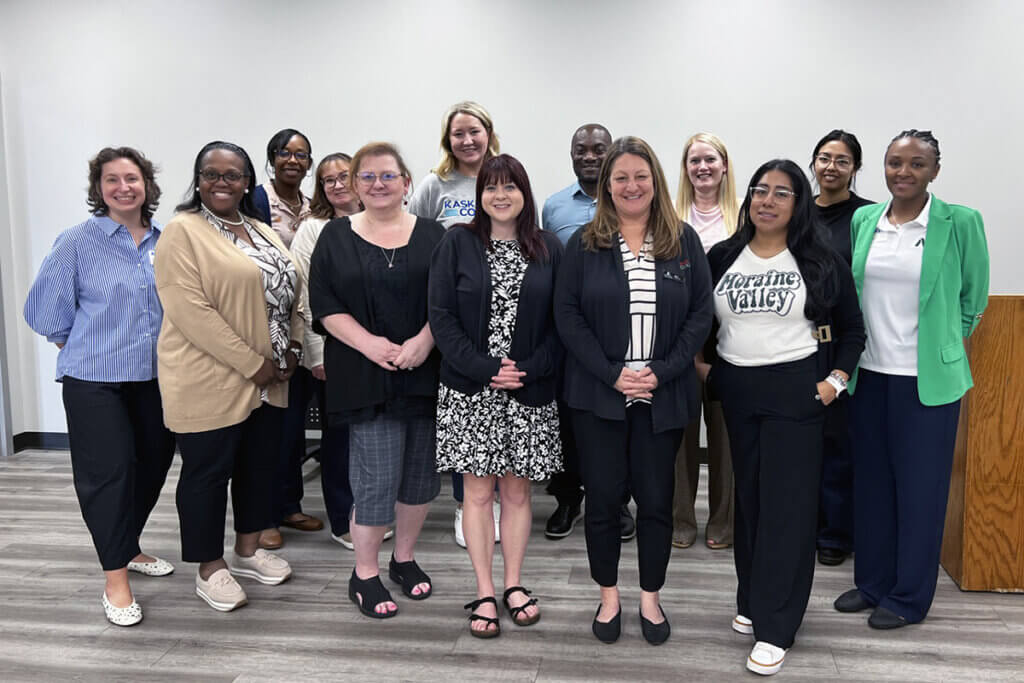
Looking ahead, most colleges indicate they are likely or very likely to continue advancing competency-based education, with a growing focus on deepening internal understanding and validating competencies directly with employer partners. At the same time, a subset of institutions, including Rend Lake College and Moraine Valley Community College, is moving closer to program approval and launch, signaling a meaningful shift from design to execution.
As colleges progress, a consistent theme across the cohort is the need for protected time to support this work. Designing and implementing CBE requires thoughtful planning, iteration, and coordination across multiple areas of the institution, including academic affairs, workforce development, and student services. Because this work is often layered on top of existing responsibilities, colleges emphasized this past year that dedicated time and space for collaboration are essential to making meaningful progress.
Moving forward, successful implementation will depend on a combination of technical support and institutional investment, ensuring that colleges not only have access to tools, coaching, and shared resources but also the internal capacity to prioritize and sustain this work. Together, these elements will be critical to moving CBE from promising design to scalable, high-quality programs that meet both student and workforce needs.
Developing Statewide Electric Vehicle Competencies
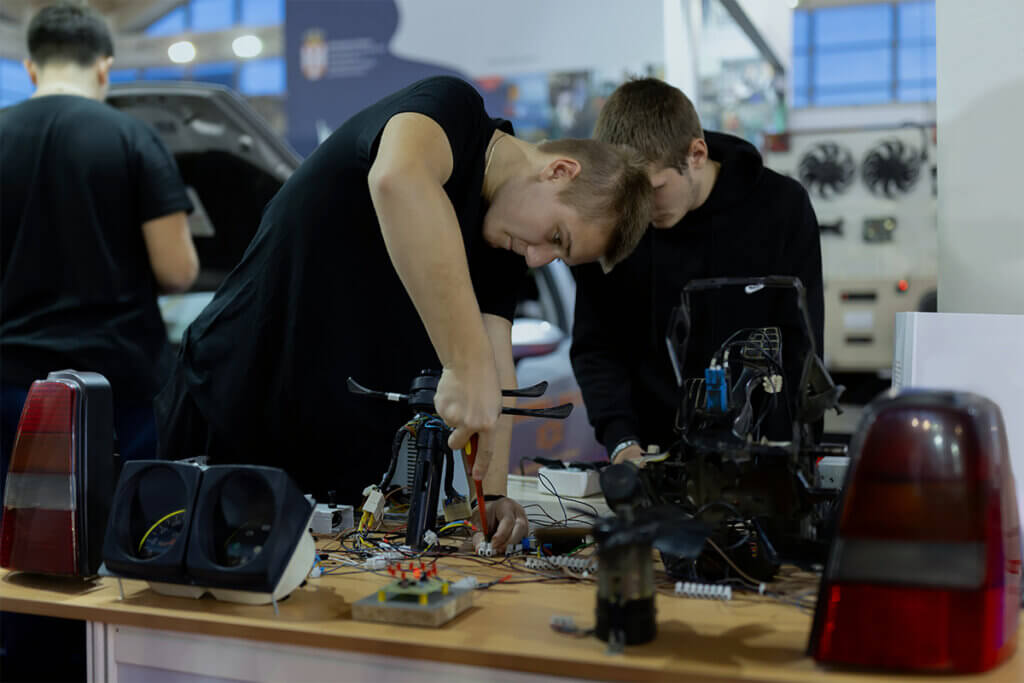
In addition to convening colleges in healthcare, EdSystems supported ICCB and the Illinois Green Economy Network (IGEN) in developing a draft statewide competency framework for electric vehicle (EV) programs, a critical step toward aligning education with the rapidly evolving automotive industry.
This work brought together faculty and employers to co-develop and refine competencies and levels of mastery across key program areas, including basic EV safety, light-duty hybrid/electric vehicle service, and hybrid/diesel equipment technology. The process emphasized alignment with industry-recognized credentials and certification standards, ensuring that competencies reflect real workforce expectations.
The resulting framework is organized around core domains such as foundational electrical knowledge, diagnostics and application, and essential employability skills. It is designed to be both practical and adaptable, supporting consistent implementation across colleges while remaining flexible as technologies evolve. A public comment period for the competencies ended in June 2026.
Building on the EV Competency Framework
The next step is to develop a complementary competency-based framework for an AAS Automotive Technology pathway that unifies EV and traditional systems, with a faculty workgroup currently convening to advance this effort. Those interested in contributing to this effort or recommending participants are encouraged to contact Heather Penczak.
Launching the Illinois CBE Resource Hub
To sustain and scale CBE efforts, EdSystems supported ICCB in launching the Illinois CBE Resource Hub, an online knowledge base that shares tools, examples, and lessons learned across institutions.
Aligned with the state’s Perkins V Career and Technical Education Plan and Higher Education Strategic Plan, the hub serves as a knowledge base for faculty, administrators, and practitioners implementing CBE. It includes resources developed through Illinois’ CBE Learning Community, as well as materials emerging from early pilot programs in fields such as industrial maintenance and welding.
By making practical tools and real-world examples accessible, the hub helps reduce duplication of effort, accelerate program development, and build a shared foundation for quality CBE implementation statewide. It also reinforces a key principle: scaling CBE requires not just individual program innovation but also intentional infrastructure for collaboration and knowledge sharing.
Looking Ahead
Taken together, these initiatives demonstrate a coordinated, statewide approach to advancing CBE through aligning program design, workforce priorities, and enabling infrastructure. Colleges are building institutional capacity, industry partners are helping to shape relevant, future-oriented competencies, and the state is supporting this work through shared tools and systems that promote consistency, quality, and scale.
While challenges remain, the momentum is clear. Illinois is not just exploring competency-based education; it is actively building the conditions for it to thrive.