Students across the Chicago South Suburbs will have clearer pathways to college and careers through a regional effort aligning education, workforce, and employer partnerships around high-demand fields.
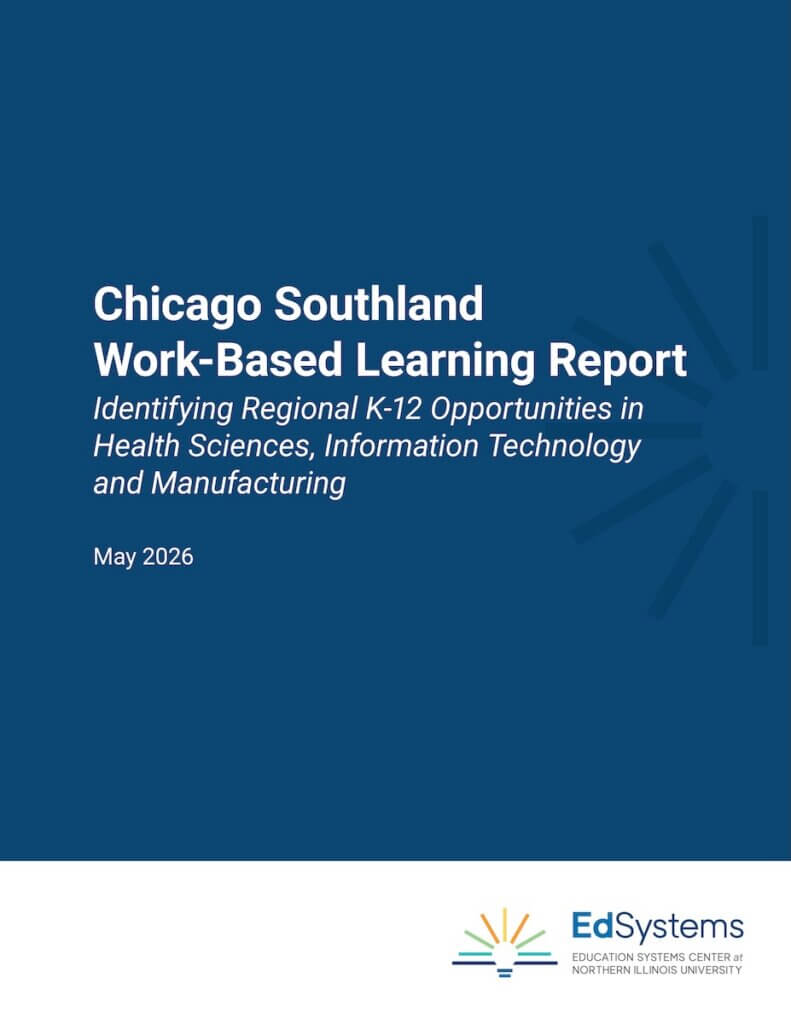
In 2025-2026, Prairie State College, South Suburban College, and EdSystems came together through the Chicago Southland Regional Pathways initiative to develop shared regional frameworks that connect students with opportunities in health sciences, information technology, and manufacturing.
Building a Regional Approach to College and Career Pathways
Students and families often navigate complex systems when trying to understand how high school coursework, college programs, credentials, and careers connect and lead to economic mobility. The Chicago Southland Regional Pathways Initiative was designed to help partners strengthen those connections by creating clearer, more coordinated college and career pathways across the region.
Funded by the Illinois Community College Board (ICCB), the initiative brought together K-12 school districts, community colleges, employers, workforce organizations, and community partners to identify opportunities for regional collaboration. Rather than creating new programs, the work focused on aligning existing Career and Technical Education (CTE), dual credit opportunities, work-based learning experiences, industry credentials, and postsecondary programs into coherent pathways that help students understand how their education connects to future careers.
Guided by Illinois’ rich policy ecosystem and supporting materials, including the College and Career Pathway Endorsement framework, Perkins V, and the Illinois Model Programs of Study Guides, regional partners developed pathway models that reflect both student success goals and workforce needs.
Connecting Students to High-Demand Careers
The pathway development process began with an analysis of labor market information for Cook County to identify occupations with strong employment demand and family-sustaining wages. These priority occupations informed a review of academic programs at Prairie State College and South Suburban College to identify high-value credentials and postsecondary opportunities aligned with regional workforce needs.
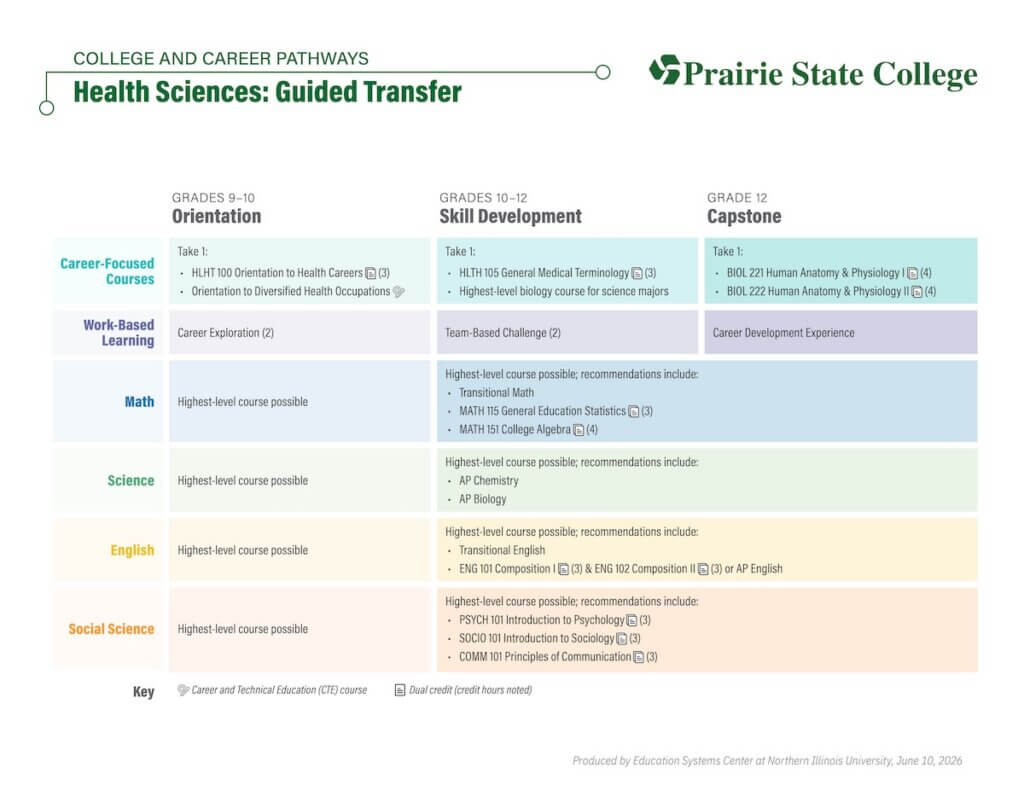
Partners then examined opportunities to strengthen connections between high schools and colleges through dual credit and model programs of study. These pathways provide students with multiple entry points while helping them understand how their coursework can lead to credentials, degrees, and careers.
The resulting pathway maps provide districts with a shared regional framework that can be adapted by districts to local needs. They help students and families better understand the steps needed to pursue careers in fields such as nursing, allied health, advanced manufacturing, engineering, welding, information technology, cybersecurity, and computer programming.
By creating greater alignment across education systems, the regional team is helping students see clearer connections between what they learn in the classroom and the opportunities available after graduation.
Expanding Access to Work-Based Learning Opportunities
Alongside pathway development, EdSystems conducted a regional inventory of work-based learning opportunities to better understand existing strengths and identify areas for continued growth. Working with school districts, colleges, and employers, the team documented career awareness, career exploration, and career development experiences available to students throughout the Chicago Southland.
The inventory highlighted a strong foundation of employer-connected learning opportunities across the region. Students are gaining exposure to careers through Manufacturing Day events, healthcare career panels, career fairs, job shadowing, employer site visits, and college campus experiences. More intensive opportunities include Prairie State College IT internships, South Suburban College allied health clinical experiences, SouthWorks MakerLab opportunities, Mi-Jack and Metals Hub pre-apprenticeships, and advanced manufacturing lab experiences.
Together, these experiences allow students to explore career options, build technical skills, earn industry-recognized credentials, and better understand how their education connects to the workforce.
The inventory also identified opportunities to strengthen the regional work-based learning system. While many schools and colleges have developed strong employer partnerships, some of the region’s most intensive experiences are limited by employer capacity. Stakeholders identified opportunities to recruit additional employer partners, expand paid work-based learning opportunities, strengthen pathway-specific career awareness activities, and create more consistent approaches for tracking student participation.
Based on these findings, EdSystems developed recommendations to support continued regional collaboration. These recommendations include leveraging the future Southland Career and Technical Center as a regional hub, establishing employer advisory groups by industry sector, coordinating regional team-based challenges, expanding career exposure opportunities, and increasing access to paid work-based learning experiences to reduce barriers to student participation.
Looking Ahead
The Chicago Southland Regional Pathways Initiative demonstrates the impact of regional collaboration in strengthening education and workforce systems. By bringing together school districts, community colleges, employers, and community organizations, partners have created a shared vision for how students can move from high school to postsecondary education and careers.
The pathway models and work-based learning recommendations developed through this initiative provide a foundation for future collaboration and implementation. As regional partners continue this work, these resources can help expand access to high-quality college and career pathways, strengthen employer connections, and support more students in reaching their career goals.
Building on this foundation, EdSystems and regional partners will continue this work during the coming school year by expanding opportunities for cross-sector collaboration and supporting implementation of work-based learning strategies across pathways. Through continued engagement with K-12 districts, postsecondary institutions, and industry partners, partners will identify opportunities to strengthen employer connections, refine pathway-specific approaches, and develop resources that support high-quality work-based learning experiences for students.
This next phase of work will focus on translating regional insights into actionable strategies that help partners address implementation challenges, align opportunities with workforce needs, and expand access to meaningful career-connected learning experiences, including in high-demand fields such as health sciences, information technology, and manufacturing.
Explore the Chicago Southland pathway resources below to learn more about regional opportunities and recommendations for strengthening college and career pathways. Organizations interested in building stronger connections between education and workforce systems can engage with EdSystems to learn how regional collaboration can support student success.